TDLI
Transdisciplinary Learning Initiatives programme
The overall goal of BvAT’s Farmer Communication Programme (FCP) is to enhance economic, social and environmental livelihoods of smallholder farmers in East Africa through increased adoption of ecologically sustainable agriculture (ESA). More specifically, the FCP interventions aim to increase smallholder farmers’ incomes; improved productivity and enhanced households’ food resilience. The three areas align with the country’s Agricultural Sector Transformation and Growth Strategy (ASTGS) priority focus areas – increase small-scale farmer, pastoralist and fisherfolk incomes; increase agricultural output and value addition; and, boost household food resilience. The fight against hunger and poverty is bound closely with global challenges of climate change, loss of biodiversity and inequality. The FCP employs multifaceted pathways to provide up to date information and knowledge on ecologically sustainable agriculture to smallholder farmers in Kenya and Tanzania with spillovers to other farmers in Africa.
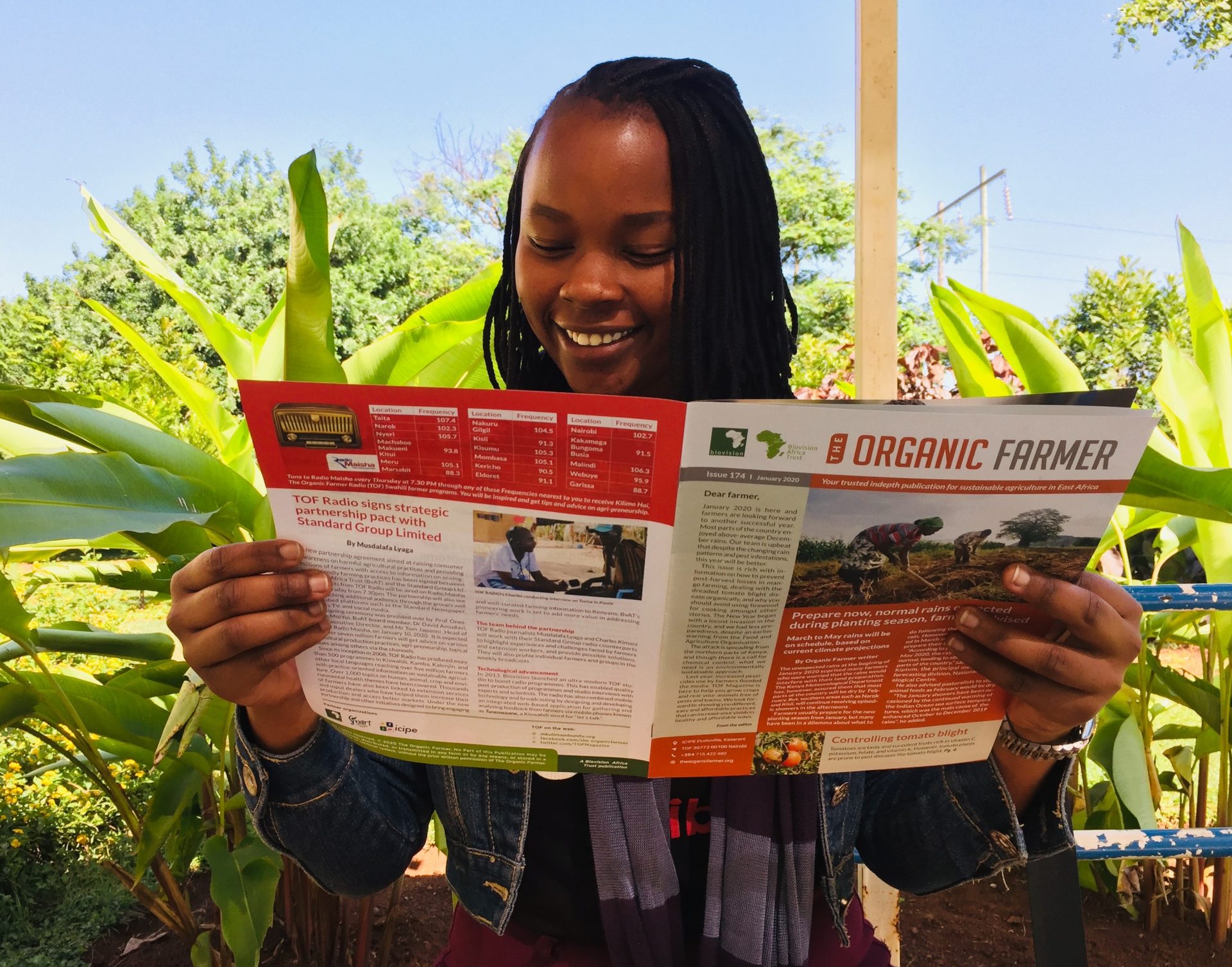
The programme made its first footprint in enhancing farmers’ knowledge on sustainable agriculture in 2005 through The Organic Farmer Magazine. The farmer communication later expanded to include The Organic Farmer Radio and Infonet, a web-based knowledge platform, in 2007. In 2009 the FCP grew to establish field-based extension services through the Farmer Communication Outreach pathway. In the same year, building on the successes of TOF Magazine, Mkulima Mbunifu Magazine was started in Arusha, Tanzania. It is gratifying that each communication pathway has evolved to become fully fledged stand-alone but providing synergies to others under the FCP. Some of the innovative technologies promoted through collaborations with FCP include icipe’s Push-Pull, fall army worm control and tsetse fly repellent collar technologies. Our FCP programme runs against a background of several constraints that continue to affect efficient and effective delivery of extension and advisory services to smallholder farmers.
To promote the development of sustainable agri-food systems in East Africa by empowering actors through capacity-building in Agroecology and Agrobiodiversity.
The programme focuses on building the capacity of youth, including both university students and extension officers. Our participant demographic comprises approximately 60% women and 40% men, reflecting our commitment to gender inclusivity and balanced representation.
The programme reaches students from East Africa universities but also global students.
Eastern Africa (Kenya, Uganda and Tanzania), with plans to expand to other East African countries. The programme is also open for international students.
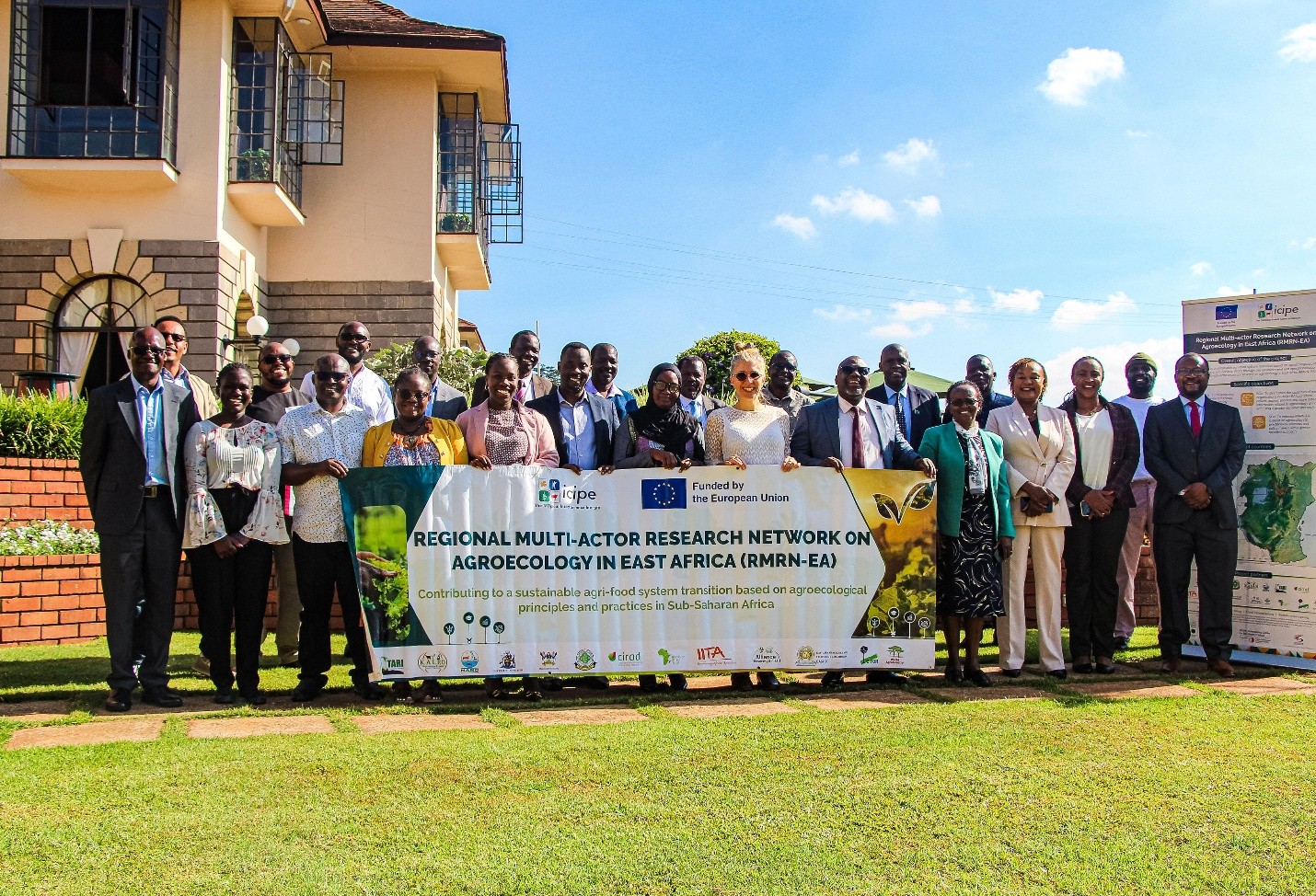
The course is coordinated by the TDLI Secretariat and features trainers drawn from a diverse range of partners, including higher education institutions, international and national research centers, development organizations, government extension services, alumni, and professional networks.
University students (Undergraduate, masters and PhD students).
Objectives
Our Strategic Objectives
Create an environment for University Students and Extension Officers to meet with experts and non-experts in the field of agroecology and agrobiodiversity (AA) to prepare the participants to address societal grand challenges.
Mainstreaming AA principles into university curricula as new topics in existing diploma/degree programmes or as specialized certificates, ensuring their continuity and wider reach
Disseminate knowledge through workshops and seminarsand online platforms (websites, Infonet, radio programme, knowledge hubs for organic agriculture, living labs) to ensure wider reach and help farmers make informed decisions.
To establish a vibrant alumni network that fosters connections, promotes professional development, and facilitates collaboration among graduates to support the advancement of sustainable agri-foods systems through agroecology and agrobiodiversity approaches.
Evaluate the impact of agroecology and agrobiodiversity approaches on transforming agri-food systems through using the three-dimensional sustainability framework.
AAITC Course
Agroecology and Agrobiodiversity International Training Course (AAITC)
AAITC is a transdisciplinary short course that seeks to build the capacity of its participants in Agroecology. The course is coordinated by Biovision Africa Trust and offered in collaboration with East Africa universities; The university of Nairobi in Kenya, Makerere University in Uganda and Sokoine University of Agriculture in Tanzania. The course hinges on pre-selected learning outcomes carefully identified based on the trends in the Agroecology, organic agriculture and food systems sectors. Following its transdisciplinary nature, the course is facilitated by qualified trainers from different sectors; universities, national and international research centers, agroecology practitioners and the private sector.
- Introduction to Agroecology and its principles
- Transformative pathways in biodiversity management and conservation
- Transformative resource management in Agroecosystems
- Science and policy interface
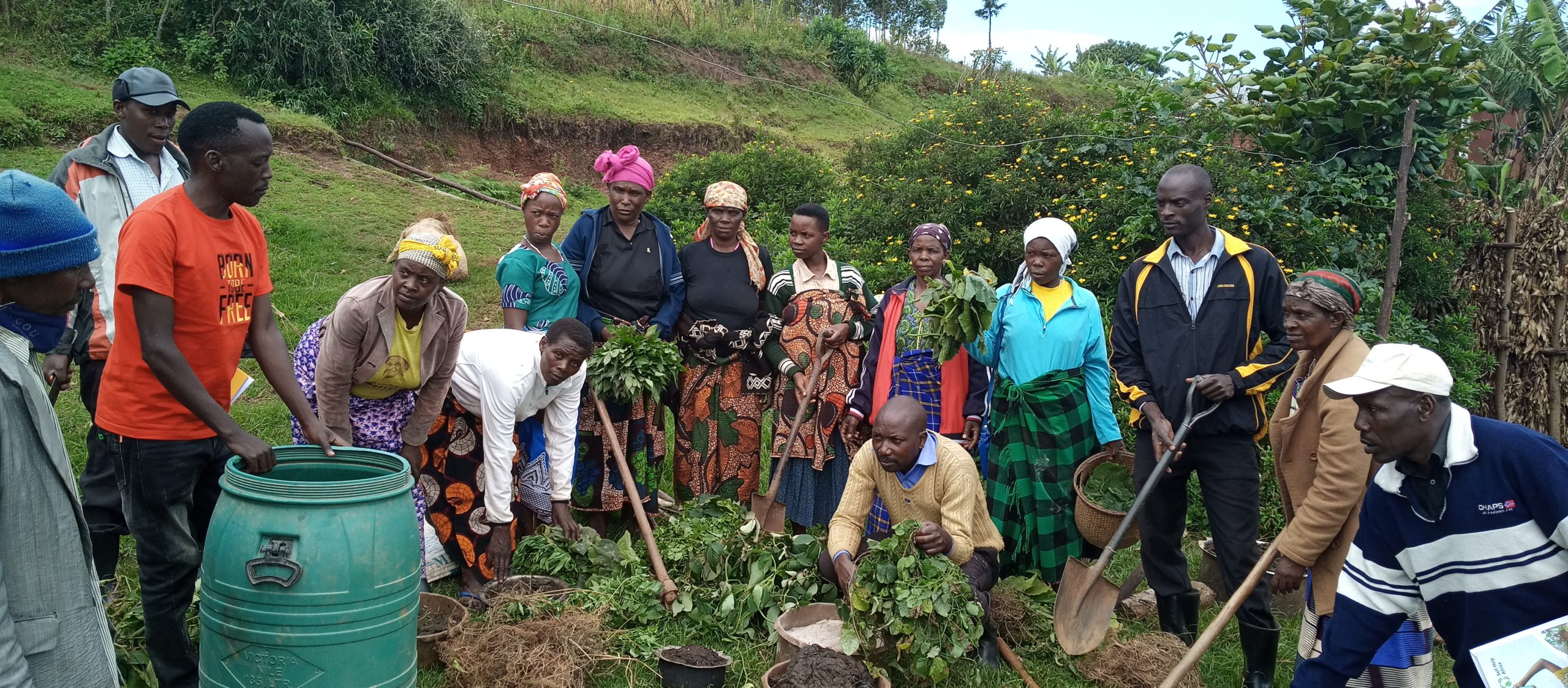
- Experience Agroecology in practice
- Agroecological entrepreneurship
- Data collection, analysis and presentation
- Opportunity to engage with different actors in the field of Agroecology including farmers, experts, practitioners and policy makers.
.

Reach Out
Have questions about TDLI or AAITC?
The programme team is glad to walk you through eligibility, dates and applications.